Milwaukee PACKOUT Review: The Ultimate Modular Tool Storage System for Garage Gearheads
Check the latest price, confirm compatibility with your setup, and then read our full hands-on review.
Quick verdict on the Milwaukee PACKOUT Review: The Ultimate Modular Tool Storage System for Garage Gearheads
Quick summary
Note: This article includes affiliate links. As an Amazon Associate, Garage Tool Authority may earn from qualifying purchases at no additional cost to you. If you hang around job sites, YouTube tool channels, or just the tool aisle at your local home center, you’ve seen it: a tall red tower of boxes rolling past like a tool storage tank. That’s Milwaukee PACKOUT—a fully modular tool storage system that started on…
Note: This article includes affiliate links. As an Amazon Associate, Garage Tool Authority may earn from qualifying purchases at no additional cost to you.
If you hang around job sites, YouTube tool channels, or just the tool aisle at your local home center, you’ve seen it: a tall red tower of boxes rolling past like a tool storage tank. That’s Milwaukee PACKOUT—a fully modular tool storage system that started on jobsites and has quietly taken over home garages, workshops, and driveway wrench sessions.
For contractors, PACKOUT is a no-brainer. But what about the rest of us—garage gearheads who wrench on cars, build projects, and need a smarter way to organize tools?
In this in-depth 2025 review, we’ll break PACKOUT down specifically from a home garage perspective:
- How PACKOUT actually works day-to-day in a garage
- What separates it from a traditional rolling tool chest
- Whether it’s worth the premium over cheaper systems like DeWalt ToughSystem 2.0
- How to build a smart starter PACKOUT stack without wasting money
Let’s start with the core pieces most garage setups revolve around, along with direct Amazon links if you’re ready to build your first stack.
Quick Buy Links: Core PACKOUT Components
- Milwaukee PACKOUT 22″ Rolling Tool Box (Base)
Buy the Milwaukee 48-22-8426 PACKOUT 22″ Rolling Tool Box on Amazon - Milwaukee PACKOUT 2-Drawer Tool Box
Buy the Milwaukee PACKOUT 2-Drawer Tool Box on Amazon
What Is Milwaukee PACKOUT, Really?
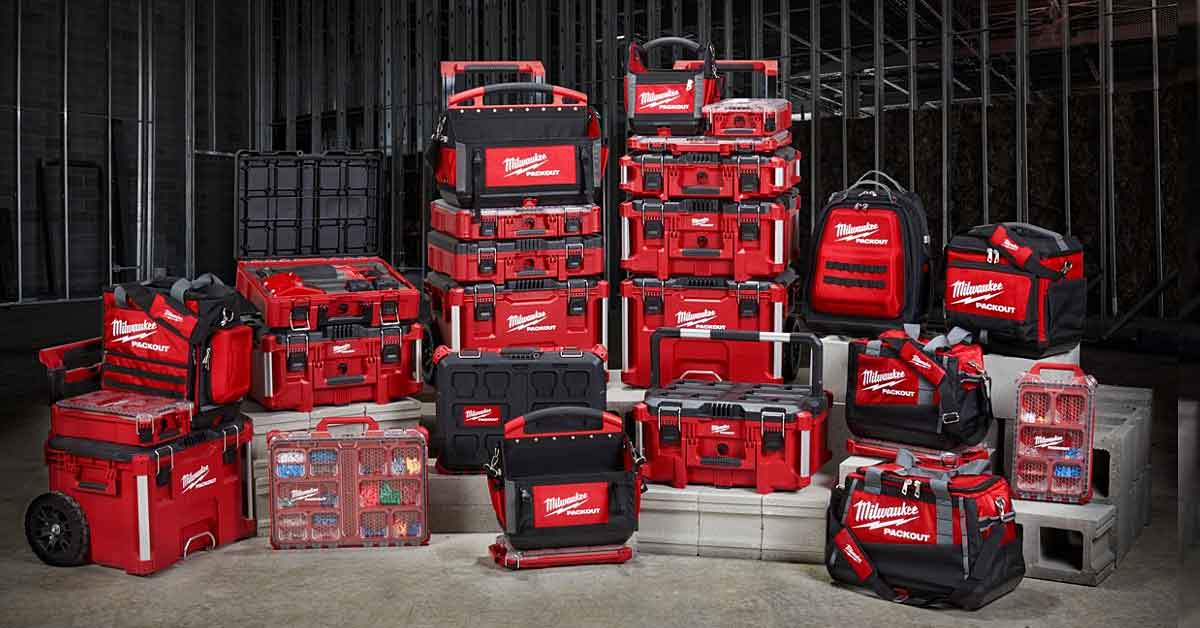
At its core, Milwaukee PACKOUT is a modular storage ecosystem built around a simple idea: every box, drawer, crate, and organizer can lock together into a custom stack.
Instead of one big chest that never moves, PACKOUT lets you build different towers and kits around how you actually work. Core components include:
- Rolling toolboxes – the wheeled base units
- Stackable toolboxes – medium and large boxes that lock on top
- Drawer units – 2-drawer and 3-drawer boxes for tools and small parts
- Small-parts organizers – shallow boxes with removable bins
- Crates and totes – open storage for bulky items
- Specialty pieces – radio, vac, cooler, and more
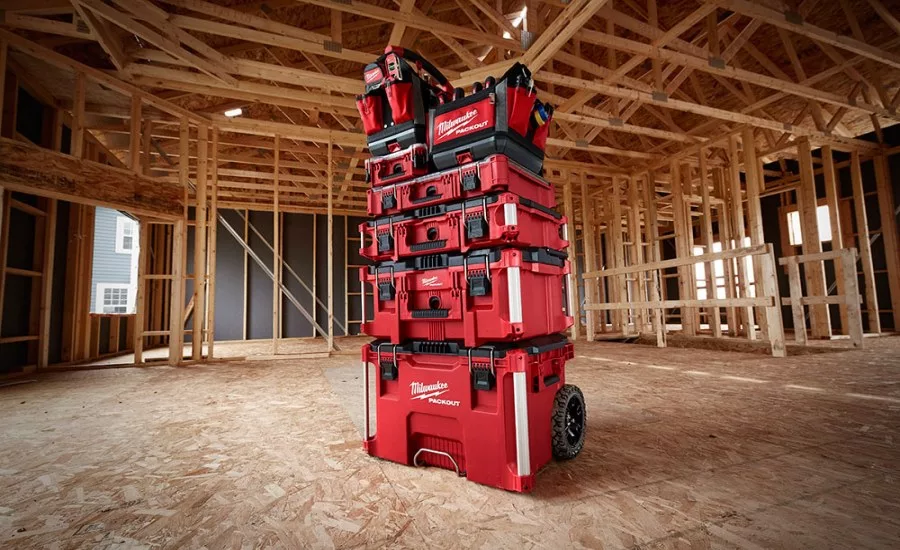
Each piece uses molded locking cleats that connect to the box below it. Drop a PACKOUT box on top, slide it until it clicks, and you’ve got a secure, rollable stack that moves as one unit.
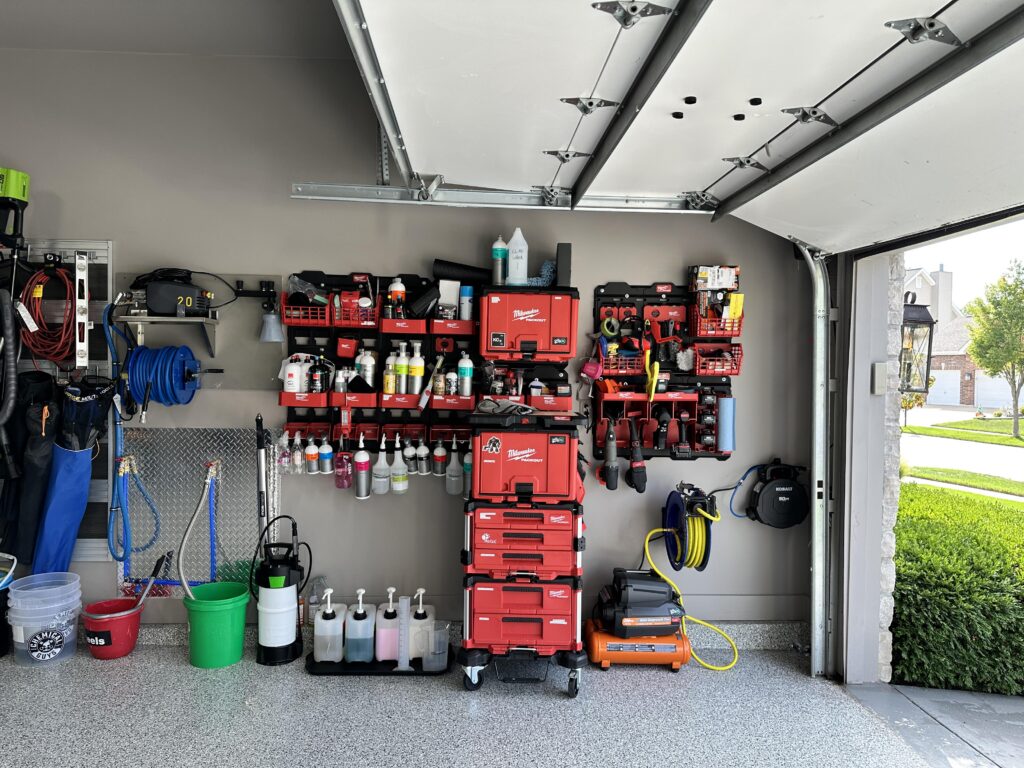
For a home garage, that means you can create purpose-built stacks—one for automotive work, one for detailing, one for electrical—and grab the exact setup you need for each project.
Build Quality: Overkill for a Home Garage (In a Good Way)
Milwaukee didn’t design PACKOUT for light use. It’s meant to handle harsh jobsite abuse, being tossed into trucks, and dragged over rubble. That construction quality translates into “overbuilt” in the average garage.
Impact-Resistant Construction
The PACKOUT rolling tool box and its siblings are constructed from impact-resistant polymers with metal-reinforced corners. The plastic feels dense and solid, not thin and brittle like budget storage bins. Latches and hinges close with a decisive snap and feel like they’re built to last.
On the rolling box in particular, Milwaukee rates the overall capacity at around 250 lb of tools and gear. That means you can load it down with steel sockets, impacts, and hand tools without worrying about the shell folding or flexing.
Weather and Dust Protection
Most PACKOUT toolboxes and organizers feature an IP65-rated weather seal. In real terms, that means they’re dust-tight and protected against low-pressure water jets.
In a garage context, that’s huge:
- Woodworking dust and grinding debris stay out of your sockets and bits
- Rolling your stack outside for a job in light rain isn’t a crisis
- Nearby pressure washing or hose spray is less likely to soak your tools
For anyone who uses their garage as a multi-purpose space—detail bay, woodshop, welding corner—this level of protection is a big upgrade over generic plastic toolboxes.
Modularity: LEGO for Tools
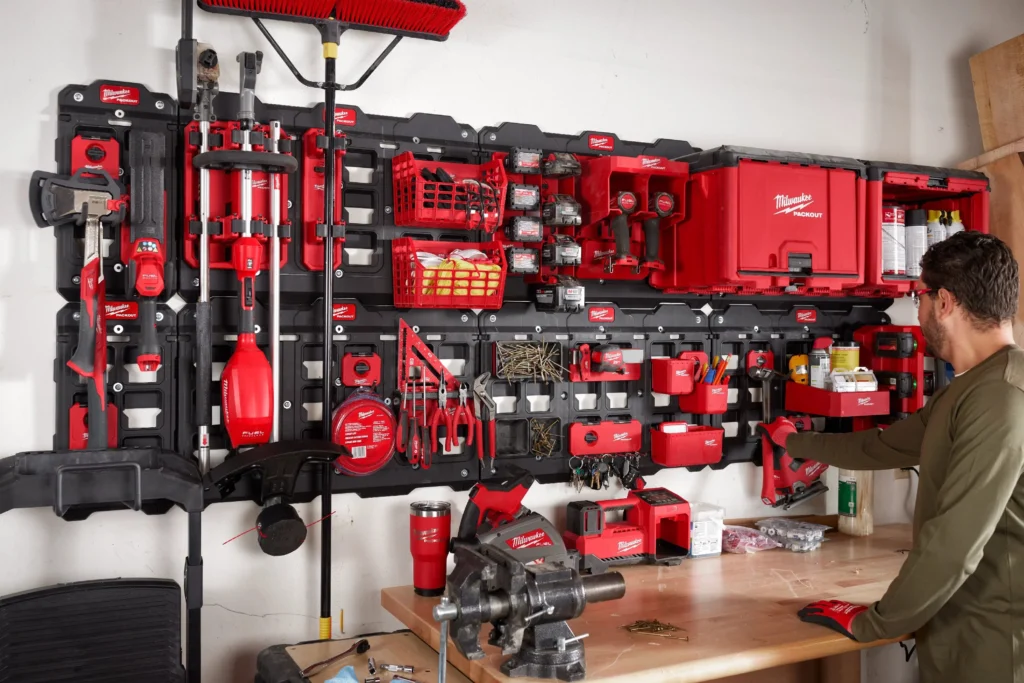
The real magic of PACKOUT is how flexible it is. Because everything locks together, you can design your storage around projects and workflows instead of just cramming everything into one big chest.
The Core Garage Stack
For most home garages, a smart starting point looks like this:
- Base: PACKOUT 22″ Rolling Tool Box
Check current price on Amazon - Middle: PACKOUT 2-Drawer Tool Box
See the PACKOUT 2-Drawer unit on Amazon - Top: Small-parts organizer or compact toolbox (for fasteners, bits, and hardware)
The rolling box typically handles larger tools—impacts, drills, grinders, ratchets—while the 2-drawer unit is perfect for sockets, wrenches, and hand tools you want to access quickly. An organizer on top takes care of lug nuts, clips, fittings, electrical connectors, and other small parts.
Project-Based Stacks
Once you’ve got the core stack dialed, you can build additional stacks around the jobs you do most:
- Automotive Stack – impacts, torque wrench, sockets, brake hardware, jacks and jack pad accessories
- Detailing Stack – polishers, towels, brushes, chemicals, pads, and small accessories
- Electrical / Small Repair Stack – meters, drivers, pliers, crimpers, terminals, fuses, and heat shrink
Each stack can live as a complete “kit” in your garage. When you’re ready to work, you roll the right stack out to the car or workbench instead of making ten trips back and forth to a fixed chest.
PACKOUT vs Traditional Tool Chests
One of the biggest questions for garage owners is whether PACKOUT can replace a traditional rolling tool chest.
Where Steel Tool Chests Still Win
A big, heavy steel chest—like a 52″ or 56″ Husky box—is still king for:
- Maximum storage density in a fixed location
- Huge collections of hand tools and specialty tools
- Shallow drawer organization where everything is visible at a glance
If your tools rarely leave the garage and you have hundreds of wrenches, drivers, and specialized tools, a traditional chest is still the backbone of your setup.
Where PACKOUT Wins
PACKOUT shines in areas where chests struggle:
- Mobility: You can roll full stacks out to the driveway, side yard, or street easily.
- Modularity: You can reconfigure stacks based on the project and keep tools grouped by task.
- Space flexibility: Tall, narrow stacks tuck into tight spaces better than a wide chest.
For many enthusiasts, the ideal garage layout ends up being a combination of both: a steel chest for static storage and one or two PACKOUT stacks for mobile, project-based work.
PACKOUT vs DeWalt ToughSystem 2.0
You can’t have a PACKOUT conversation without mentioning its main competitor: DeWalt ToughSystem 2.0.
Across independent tests and tool reviews, the consensus usually looks like this:
- PACKOUT feels more premium: fit, finish, latches, and handles are a step up.
- ToughSystem 2.0 is more budget-friendly: it’s often significantly cheaper for similar capacity.
- PACKOUT has a wider ecosystem: more drawers, organizers, accessories, and specialty components.
If you absolutely need to save money and just want a modular stack, ToughSystem 2.0 is a strong contender. If you’re building a long-term, expandable system and don’t mind investing more up front, PACKOUT is the better choice—and it’s the one Garage Tool Authority recommends as the premium pick.
Real-World Usability in a Home Garage
Rolling to the Vehicle Instead of the Vehicle Coming to You
Picture a Saturday brake job or suspension refresh. With a traditional chest, you’re:
- Grabbing a handful of tools
- Walking to the car
- Realizing you forgot something
- Walking back to the chest…repeat
With a PACKOUT stack, you roll everything you need right to the car. The rolling toolbox sits next to the vehicle; drawers open easily; organizers on top give quick access to fasteners and hardware. The difference in efficiency and frustration is real.
Parking and Footprint
A full PACKOUT stack has a smaller footprint than a big chest but is much taller. That’s ideal for smaller garages where wall space is at a premium and you need to use vertical space efficiently.
You can also break a tall tower down into smaller stacks if needed—two mid-height stacks instead of one tall one—which makes parking them in different corners of the garage easier.
Inside the Drawers and Organizers
Packing PACKOUT intelligently makes it even better:
- Use the rolling toolbox for tall tools (impacts, drills, grinders, multi-tools).
- Use the 2-drawer toolbox for sockets, wrenches, pliers, and frequently used hand tools.
- Use small-parts organizers for fasteners, electrical connectors, automotive clips, and fittings.
Dividers and removable bins help you keep everything separated, and you can take individual bins out and set them on the bench while you work.
Downsides: Where PACKOUT Can Be Annoying
No system is perfect. PACKOUT has a few real-world downsides you’ll want to know before you commit.
The PACKOUT Rabbit Hole
Once you start building a PACKOUT setup, it’s very easy to keep adding “just one more” box or organizer. The ecosystem is deep, and everything integrates nicely, which is fantastic for organization—but dangerous for your tool budget.
Weight Adds Up Fast
Each individual box is manageable, but:
- Fill them with steel tools, and
- Stack them three or four levels high,
…and you’ve got a serious amount of weight rolling around. That’s fine on a smooth garage floor, but lifting a fully loaded stack into a truck or up stairs is a two-person job.
Not a One-for-One Replacement for a Full Tool Chest
Even with drawer units, PACKOUT doesn’t completely replace a large, shallow-drawer chest if you have a huge tool collection. If your goal is to see every wrench and screwdriver laid out flat, you’ll still want a traditional chest in the mix.
Who PACKOUT Is Perfect For
PACKOUT makes the most sense in a garage for a few specific types of users.
The Driveway Wrencher
If you routinely pull vehicles into the driveway and:
- Swap wheels and tires
- Do brakes, suspension, and oil changes
- Detail and correct paint outside
…PACKOUT lets you roll your entire kit to the car instead of running back and forth to a chest.
The Multi-Use Garage Owner
If your garage is a blend of:
- Workshop
- Storage area
- Home gym or kids’ space
…you don’t want tools spread out everywhere. PACKOUT stacks park tightly against the wall, free up floor space, and can be reconfigured as your needs change.
The Project-Driven DIYer
If you do lots of different things—car work, woodworking, electrical upgrades, home repair—project-based stacks make your life easier. You can grab the “automotive” stack one weekend and the “home repair” stack the next.
The Tool Nerd Who Wants the Good Stuff
If you care about quality, fit and finish, and long-term durability, PACKOUT is the modular system that feels genuinely premium in the hand. It’s not the cheapest option, but it’s built to be used hard and used often.
How to Build a Smart PACKOUT Setup Without Wasting Money
It’s easy to overbuy on day one. Here’s a simple, low-regret way to build your system.
Step 1: Start With One Core Stack
Begin with a single stack built around the essentials:
- PACKOUT 22″ Rolling Tool Box for large tools
Get the PACKOUT Rolling Tool Box on Amazon - PACKOUT 2-Drawer Tool Box for sockets and hand tools
Get the PACKOUT 2-Drawer Tool Box on Amazon - One organizer (standard or compact) for small parts
Load this stack with the tools you reach for most often. Use it for a month of normal projects. You’ll quickly see what needs to move into PACKOUT and what can stay in a chest or cabinet.
Step 2: Add Organizers for Specific Tasks
Next, pick up a couple of small-parts organizers and dedicate each one to a single job type:
- Brake/Chassis Organizer: clips, pins, small hardware, anti-rattle parts
- Electrical Organizer: terminals, butt connectors, fuses, shrink tubing
- Detailing Organizer: pad adapters, small brushes, clips, tape
These organizers live on top of the core stack when it’s time for that job. The rest of the time, they’re parked on a shelf or on top of your chest, ready to go.
Step 3: Expand Only When You Feel Friction
Instead of buying every PACKOUT box under the sun, wait until you feel real friction:
- You’re constantly reshuffling one box to fit different tools.
- You want a dedicated stack for a common type of project.
- You hit the limits of what your current drawers can organize cleanly.
That’s the time to add another drawer unit, an extra rolling base, or more organizers. Let your workflow drive what you buy, not the other way around.
Pros and Cons (Garage Perspective)
Pros
- Extremely durable construction with impact-resistant polymers and reinforced corners
- IP65 seals help protect tools from dust and splashes
- Highly modular ecosystem with rolling boxes, drawers, organizers, crates, and totes
- Fantastic for project-based “grab and go” stacks for different types of work
- Tall, narrow stacks use vertical space efficiently in smaller garages
- Deep ecosystem makes it easy to grow and customize over time
Cons
- More expensive than generic toolboxes and often pricier than DeWalt ToughSystem 2.0
- Fully loaded stacks can be very heavy and awkward to lift into vehicles
- Doesn’t completely replace a large shallow-drawer chest for massive tool collections
- Easy to fall into the PACKOUT “rabbit hole” and overspend on extra pieces
Final Verdict: Is Milwaukee PACKOUT Worth It for Your Garage?
If you’re just starting out with a tiny tool collection, PACKOUT might be more system than you need on day one. But if you’re at the point where your tools are overflowing cheap boxes and you’re serious about keeping your garage organized long term, PACKOUT is an incredibly compelling option.
For most Garage Tool Authority readers, the answer looks like this:
- Yes, PACKOUT is worth it if you want mobile, modular, genuinely tough storage built to last.
- It pairs best with a traditional steel chest—PACKOUT for what moves, the chest for what stays put.
- Start with one smart stack (rolling box + drawer + organizer) and grow from there as your projects demand it.
If you’re ready to start building your own PACKOUT system, begin with the core components below and tailor the rest of the stack to how you actually work in your garage:
- Milwaukee PACKOUT 22″ Rolling Tool Box
View the PACKOUT Rolling Tool Box on Amazon - Milwaukee PACKOUT 2-Drawer Tool Box
View the PACKOUT 2-Drawer Tool Box on Amazon
Build one solid stack, live with it for a bit, and you’ll quickly see why PACKOUT has moved from job sites into serious home garages everywhere.
Frequently asked questions about the Milwaukee PACKOUT Review: The Ultimate Modular Tool Storage System for Garage Gearheads
What Is Milwaukee PACKOUT, Really?
Final Verdict: Is Milwaukee PACKOUT Worth It for Your Garage?
What is Milwaukee PACKOUT Review: The Ultimate Modular Tool Storage System for Garage Gearheads and what does it do?
Who is Milwaukee PACKOUT Review: The Ultimate Modular Tool Storage System for Garage Gearheads best for?
What are the main downsides of Milwaukee PACKOUT Review: The Ultimate Modular Tool Storage System for Garage Gearheads?
Should you buy the Milwaukee PACKOUT Review: The Ultimate Modular Tool Storage System for Garage Gearheads?
If this review helped you decide, using our link is the easiest way to support future testing and keep the site running.