
Note: Some links below are affiliate links. As an Amazon Associate, Garage Tool Authority earns from qualifying purchases at no extra cost to you.
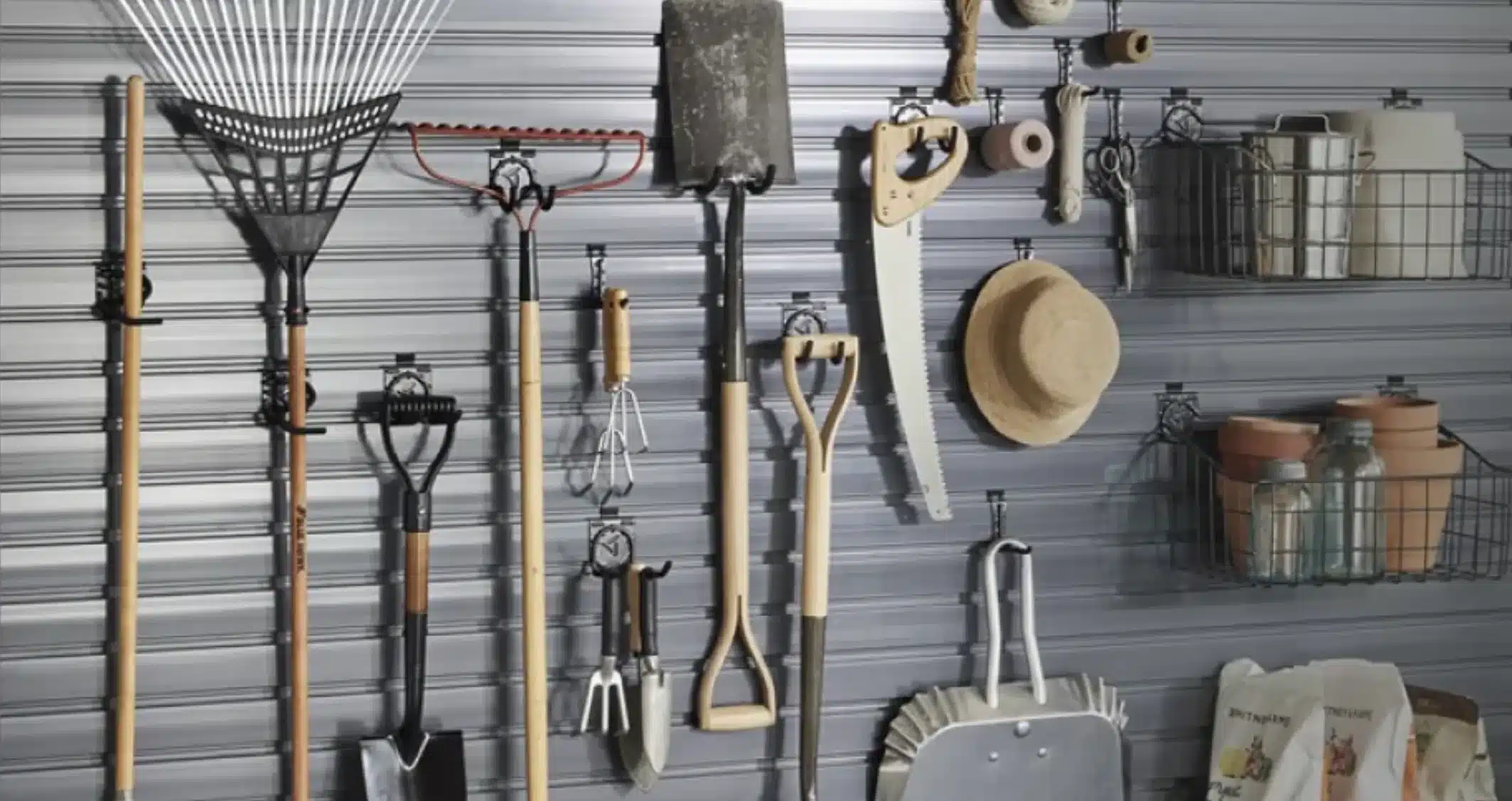
Your garage floor is not a storage system. Every tool, extension cord, and seasonal item sitting on the ground is something you’ll trip over, step on, or lose behind a shelf. The fix is simple: move everything to the walls.
But which wall storage system actually deserves your money? The three main contenders — slatwall panels, pegboard, and track rail systems — each have strengths, weaknesses, and specific use cases where they excel. I’ve tested all three. Here’s the honest breakdown.
Slatwall Panels: The Premium Choice
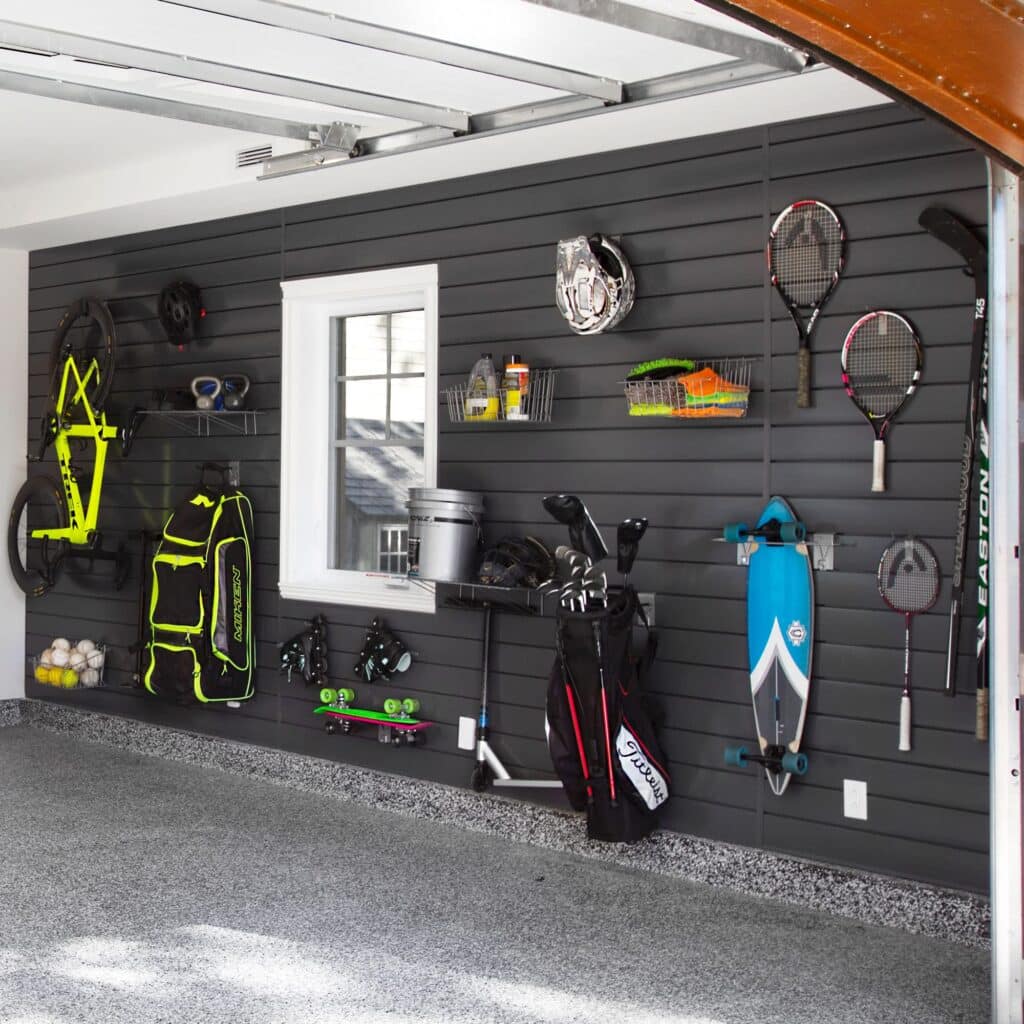
Slatwall is what commercial retail stores use to display merchandise. Horizontal channels accept hooks, bins, shelves, and specialty holders that lock into place and can be repositioned without tools. The result is a clean, uniform look with maximum flexibility.
For garage use, heavy-duty PVC or composite slatwall panels mount directly to wall studs and support significant weight — typically 50-75 pounds per square foot depending on the panel quality and mounting method. The horizontal channel design means you can place hooks and accessories at any horizontal position, not just where holes happen to be.
The main advantage of slatwall is aesthetics and flexibility. A slatwall garage looks professional. Accessories slide into place smoothly and hold securely. Repositioning takes seconds — no pulling hooks out of holes and leaving empty gaps.
The downside is cost. A full wall of slatwall runs $8-$15 per square foot for panels alone, plus accessories. A single garage wall can easily cost $500-$1,000 fully outfitted. Installation is straightforward but requires precision — panels need to be level and properly secured to studs.
Slatwall is the right choice if you want a showroom-quality garage, you’re willing to invest, and you value the ability to reconfigure your layout easily over time.
Pegboard: The Budget Workhorse
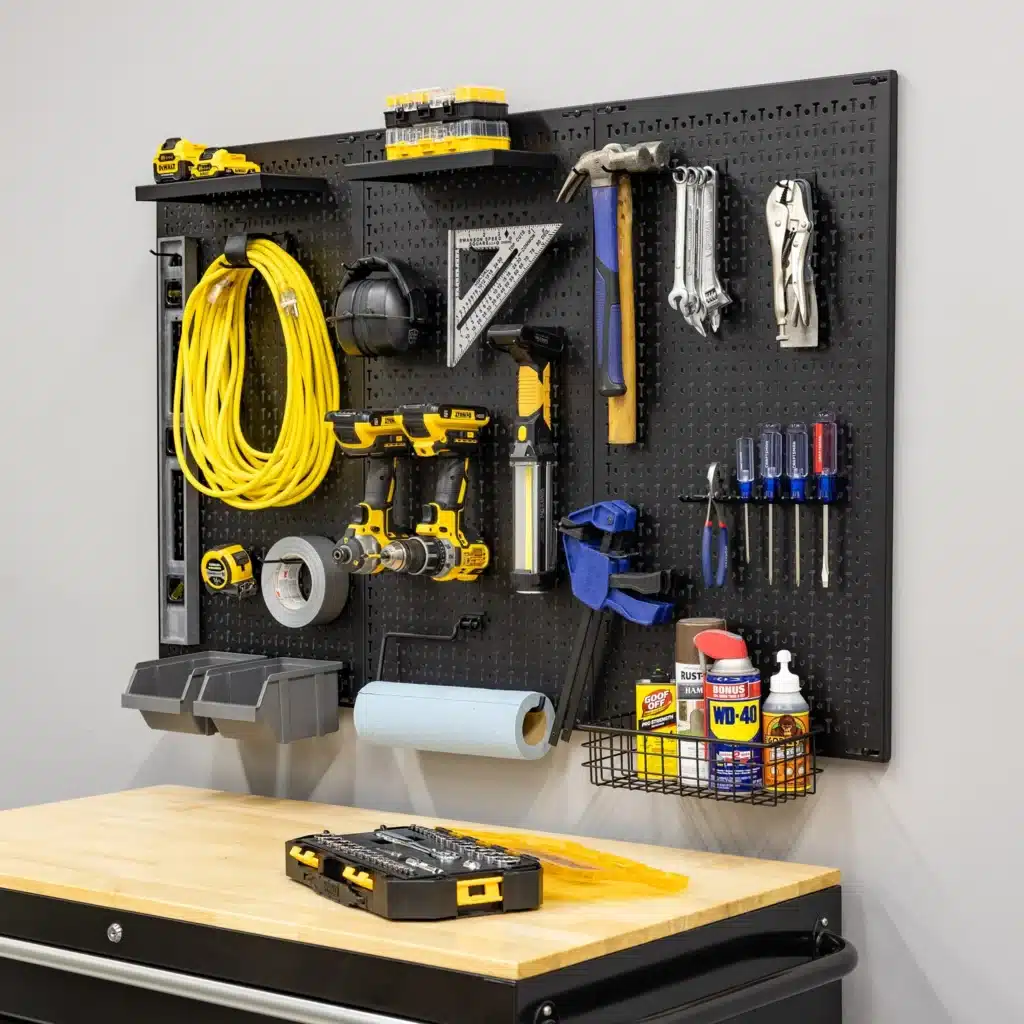
Pegboard has been in garages for decades because it works. A sheet of hardboard or metal with evenly spaced holes accepts standard hooks, bins, and holders. It’s cheap, widely available, and compatible with a massive ecosystem of accessories.
A 4×8 sheet of standard hardboard pegboard costs $15-$30. Metal pegboard costs more ($50-$100 per sheet) but is significantly more durable and supports heavier loads. Standard pegboard hooks cost $1-$3 each. You can outfit an entire wall for under $100.
The advantage is obvious: cost. Pegboard gives you functional wall storage for a fraction of slatwall pricing. It’s also easy to install — mount it with spacers to create clearance for hooks, and you’re ready to hang tools.
The limitations are real too. Standard hardboard pegboard sags over time if overloaded. Hooks fall out when you remove tools, which is endlessly annoying. The uniform hole pattern limits accessory positioning to a grid — you can’t place a hook between holes. And the look is utilitarian at best.
Metal pegboard solves the durability and sagging problems but costs 3-5x more than hardboard. At that price point, you’re approaching slatwall territory. If you’re going metal pegboard, compare the total cost against slatwall before committing.
Pegboard is the right choice if budget is your primary constraint, your garage serves a working function over aesthetics, and you mostly need to hang hand tools.
Track Rail Systems
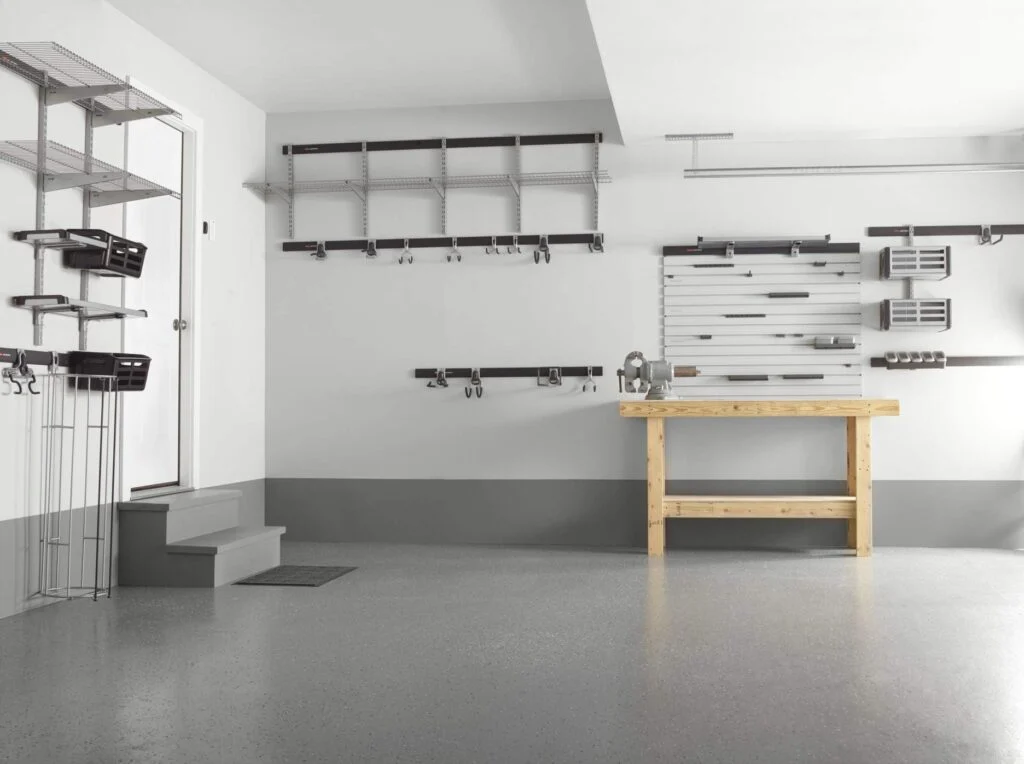
Track systems (like the French cleat or proprietary rail systems from brands like Gladiator and Rubbermaid) mount horizontal rails to the wall, and accessories hook over the rail. The design is inherently strong — gravity keeps accessories in place — and the horizontal rail provides continuous positioning flexibility.
French cleats are the DIY favorite. Two interlocking 45-degree-angled strips — one on the wall, one on the back of whatever you’re hanging — create an incredibly strong connection. You can build custom tool holders, shelf brackets, and storage boxes that all use the same mounting standard. The system is infinitely expandable and costs almost nothing if you have a table saw and scrap wood.
Proprietary track systems cost more but come with purpose-built accessories — bins, hooks, shelves, bike hangers, and specialty holders designed specifically for the system. The advantage is convenience and finish quality. The disadvantage is vendor lock-in — accessories from one system rarely work with another.
Track systems are the right choice if you want something stronger than pegboard, more affordable than slatwall, and you value the DIY flexibility of building custom solutions (French cleat) or the convenience of a complete accessory ecosystem (proprietary systems).
Before You Buy: The Wall Decides the Weight Rating
Every capacity figure on a listing assumes correct mounting. A rack screwed into wood studs (normally 16 inches on center) with the right lag or structural screws can carry what the maker says. The same rack on drywall anchors carries a small fraction of it, and adhesive mounts carry brooms, not shovels. Find the studs, plan rail and panel positions around them, and on masonry or block use proper sleeve or wedge anchors. If the listing quotes one large number, read whether it is per hook, per rail, or for the whole kit.
Specific Picks for Each System
Once you’ve chosen the system, these are the products worth a look. They were picked by comparing manufacturer specs and current listings, not by load-testing each one. Check the current price on each listing before you buy.
| System | Example | Key manufacturer specs | Best for |
|---|---|---|---|
| PVC slatwall | Proslat panels | PVC slats, moisture-resistant; 8 ft × 4 ft sections (3-pack covers 96 sq ft) or 4 ft × 4 ft kit; takes Proslat hooks, baskets and shelves | A whole finished wall you will keep rearranging |
| Steel pegboard | Wall Control 48″ × 24″ kit; Ultrawall 4-panel set | Powder-coated steel; Wall Control kit includes hooks, bins and shelves; Ultrawall panels about 12″ × 24″ each with standard peg spacing | Hand tools over a workbench |
| Rail and hook | Rubbermaid FastTrack | Steel rail screwed to studs; hooks snap on anywhere along it; multi-purpose hook rated by the maker to 50 lb | Bikes, ladders, hoses, heavy one-off items |
| Handle racks | TIDYME 48″ steel rack; spring-grip broom holders | TIDYME: 48″ long, 3 rails and 6 adjustable hooks, coated steel, screw-mounted | Rakes, shovels, brooms, string trimmers |
| Power-tool organizers | CCCEI modular rack; YYR charging rack | Steel shelf with drill slots and battery shelf; built-in surge-protected power strip (8 outlets on the CCCEI) | A cordless-tool charging station |
Slatwall: Proslat PVC Panels
PVC panels such as Proslat’s shrug off damp and road salt in a way MDF slatwall does not, and they finish the wall as well as organize it. Most of the cost is in the accessories, which are system-specific, so budget for them and buy into one brand.
- Proslat 8 ft × 4 ft PVC slatwall, 3-pack (96 sq ft) — for a full wall.
- Proslat 88103 4 ft × 4 ft kit — a starter section above a bench or beside a door.
Screw panels through to the studs, not just into drywall. The slat spreads load well, but only if the panel itself is anchored.
Steel Pegboard: For Hand Tools at the Bench
Steel pegboard fixes what was wrong with hardboard: the holes don’t wallow out and hooks don’t pull free when you grab a tool. Wall Control’s panels accept both its own slotted accessories and conventional 1/4″ peg hooks, and its 48″ × 24″ kits arrive with an assortment of hooks, bins and shelves. Ultrawall’s four-panel set is a lower-cost way to cover a similar area using standard peg hooks.
Pegboard is for things you can lift with one hand. Put the heavy items on a rail.
Rail Systems: For the Heavy, Awkward Things
A steel rail lagged into every stud it crosses is the strongest of these systems per dollar. Rubbermaid’s FastTrack is the widely stocked example: mount the rail once, then snap hooks on wherever they are needed and slide them as the garage changes. The FastTrack multi-purpose hook is rated by Rubbermaid to 50 lb, and there are dedicated bike, ladder and hose hooks in the same range. For loose one-off hanging points, a pack of screw-in steel utility hooks driven into studs does the same job with less flexibility.
Handle Racks: Brooms, Rakes and Shovels
Long-handled tools are what actually clutter most garages, and they need the least engineering. There are two kinds:
- Screw-mounted steel racks — the TIDYME 48-inch rack uses three coated-steel rails with six repositionable hooks. The listing quotes a high total capacity; treat that as a studs-only figure. Right for shovels, rakes, trimmers and folding chairs.
- Spring-grip holders — the Amazon Basics holder and the reliahom 4-rack set grip handles in rolling-ball slots with hooks between. Fine for brooms, mops and light garden tools. Adhesive-mounted versions such as the voze holder suit a laundry room better than an unheated garage, where temperature swings and dusty block walls defeat adhesive.
Power-Tool Organizers With Charging
These are steel shelves with slots that hold drills and drivers by the nose, a shelf above for chargers and batteries, and a built-in power strip. The CCCEI modular organizer has an eight-outlet surge-protected strip; the YYR organizer is the same idea in red. Many sellers offer near-identical versions, so choose on slot count for the tools you own and on whether the strip is UL or ETL listed. Two cautions: mount into studs, because a loaded rack of drills and batteries is heavier than it looks, and don’t leave lithium batteries charging unattended in a garage that gets very hot or drops below freezing. Follow the battery maker’s temperature limits.
Small Parts and Lumber
Two specialized racks round out a working wall. The VEVOR wall-mounted bin system hangs 30 plastic bins on louvered panels for screws, fittings and electrical parts. The Ultrawall lumber rack is a set of three-level steel brackets for boards, conduit and trim. Mount each bracket to its own stud and keep the heaviest stock on the lowest level.
My Recommendation
For most garage owners, a hybrid approach works best. Slatwall on the primary work area wall where you want quick access and visual organization. Pegboard or French cleat on secondary walls where function matters more than appearance. And overhead ceiling storage for seasonal and rarely-used items that don’t need to be at arm’s reach.
Don’t try to do all walls at once. Start with the wall you face when you walk in — that’s the one that drives your daily experience of the space. Get that wall right, live with it for a month, and then expand. Your storage needs will become clearer once you start using the system, and you’ll make better decisions on walls two and three.
How to Combine Them
- Working wall over a bench: steel pegboard at eye level, a power-tool charging rack beside it, bins below.
- Side wall by the cars: one long rail at about 6 ft for bikes, ladders and hoses, plus a 48″ handle rack for garden tools.
- Finishing the whole garage: slatwall, and commit to one accessory family.
- Bulky bins and seasonal storage: these belong on shelves or overhead, not on the wall. See garage shelving and overhead storage: fixed vs motorized.
Related: the complete home garage tool setup guide · the garage workbench guide.
Frequently Asked Questions
Slatwall or pegboard?
Slatwall for a whole wall and heavier, bulkier items; steel pegboard for a dense layout of hand tools in a small area. Many garages use both.
Can I mount wall storage on drywall alone?
Only for light items. Anything holding real weight should be screwed into studs. If the studs aren’t where you need them, screw a horizontal 2×4 or a plywood backer to the studs first and mount to that.
How high should a storage rail go?
High enough that long tools clear the floor and car doors clear what is hanging — roughly 5 to 6.5 feet for most garages — and low enough that you can lift items off without a step stool.
Update, September 23, 2026: We merged our separate wall storage guide into this one. This page now adds specific product picks for each system, a note on how mounting decides the weight rating, and a short FAQ.
